Valuer Insights
Business Insights | New Supply Landscape and Regional Evolution of Hong Kong's Luxury Residential Market
Hong Kong's Luxury Residential Market Is Being Redrawn
September 15, 2026
Contact
Executive Director, Valuation & Advisory Services, Hong Kong

The Old Guard Still Holds — But the Ground Is Shifting
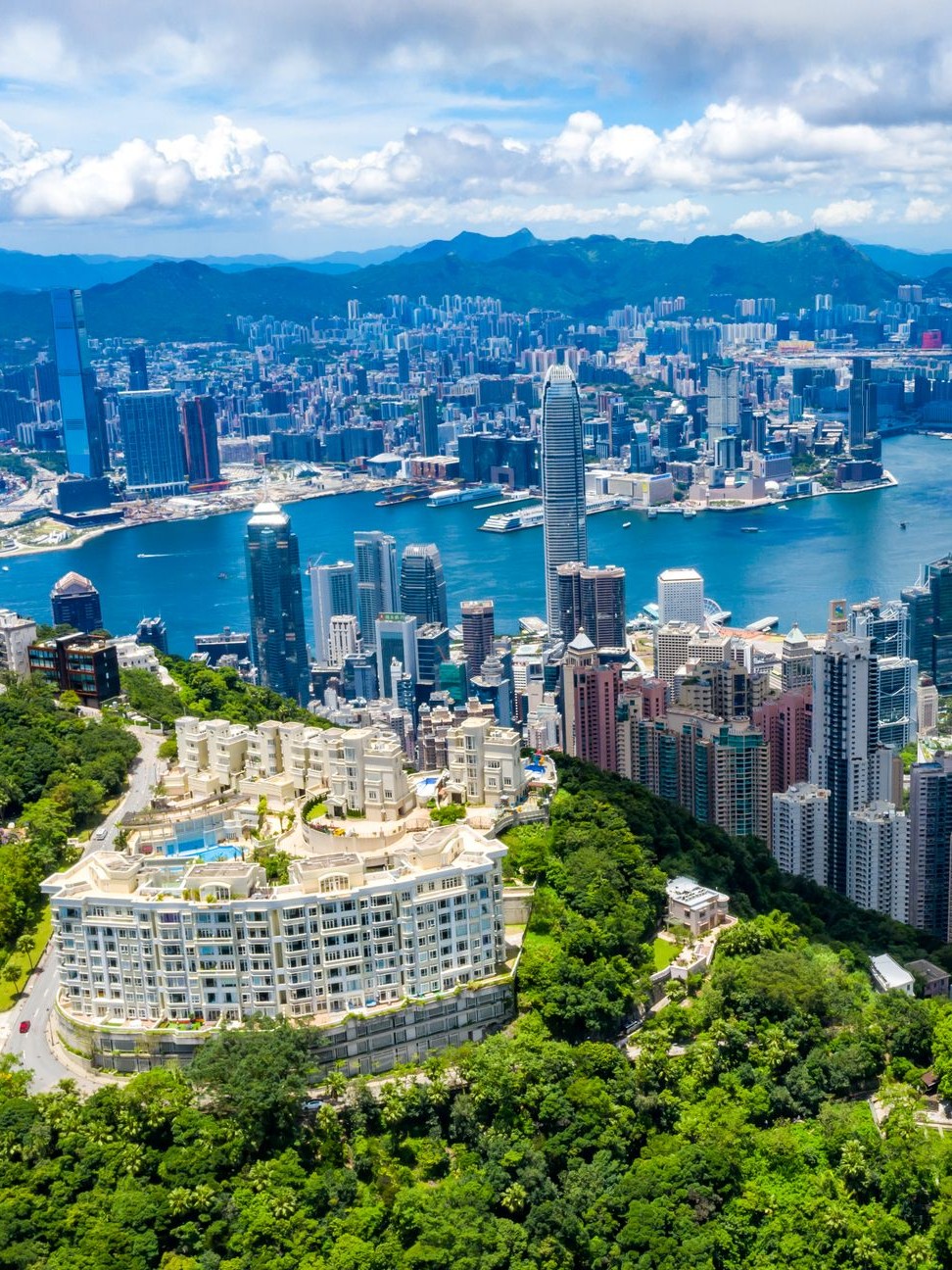
For generations, Hong Kong's luxury residential market played by one rule: the higher the altitude, the higher the prestige. The Peak. Deep Water Bay. Repulse Bay. Shek O. These names carried weight not just as addresses, but as signals of arrival.
Fewer than 100 new units reach The Peak market in any given year, making available properties less a housing option than a distinct asset class with its own rules. That scarcity still commands a premium. But beneath the surface of this established hierarchy, new land-supply policies and urban-planning initiatives are producing a different kind of luxury residential supply — in places that high-end buyers once would not have considered.
Kai Tak. Wong Chuk Hang. The Northern Metropolis. Hong Kong's luxury market is not losing its old centres of gravity. It's gaining new ones.
"Hong Kong's luxury market is not losing its old centres of gravity. It's gaining new ones.”
Eddie Kwok
Executive Director, Valuation & Advisory Services, Hong Kong
| The Peak Supply | Kai Tak Pricing | Wong Chuk Hang Pricing |
|---|---|---|
| < 100 units/year | HK$30,000-70,000+/sqft | HK$30,000-40,000/sqft |
| New supply on The Peak annually | Kai Tak waterfront asking prices | Wong Chuk Hang unit prices |
Source: CBRE Hong Kong VAS, 2026
Supply Bottlenecks in Traditional Luxury Districts
Hong Kong's traditional luxury districts — including The Peak, the Southern District (Repulse Bay and Deep Water Bay), and Kowloon Tong — have long been constrained by chronic supply shortages. Development in these neighbourhoods was largely completed by the mid-20th century, leaving new supply dependent on rare redevelopment projects and occasional government land sales.This longstanding supply model is increasingly facing challenges. Ageing infrastructure within older luxury estates often struggles to meet the expectations of a new generation of wealthy buyers, who place greater emphasis on smart-home technology, sustainability features, and premium clubhouse amenities.
Presale Consent Approved and Yet to Launch (Luxury Projects), as of end of June 2026
| Region | District | Address | Developer | No. of Units |
|---|---|---|---|---|
| Hong Kong Island | Ap Lei Chau | No. 18 Ap Lei Chau Praya Road | Tai Cheung Holdings | 38 |
| Kowloon |
Beacon Hill | No. 188 Lung Cheung Road (Phase 1,2&3) | Wharf Holdings | 133 |
| Kai Tak | No. 16 Shing Fung Road (Phase 1&2) | CK Asset | 723 | |
| Kai Tak | No. 18 Shing Fung Road (Phase 2 A) | China Overseas Land & Investment / Henderson Land / Wharf Holdings / K Wah International | 405 | |
| Kowloon Tong | No. 79 Broadcast Drive | Lai Sun Development | 46 | |
| Total | 1,345 | |||
Source: CBRE Hong Kong VAS, Lands Department, Market Sources.
Kai Tak: A Runway Becomes a Waterfront Address
The former Kai Tak Airport runway sits in the middle of Kowloon — which is precisely why nobody predicted it would become one of Hong Kong's most talked-about luxury addresses.The Kai Tak Development Area benefits from a master-planned layout that older luxury districts simply cannot offer: a continuous waterfront promenade, more than 40 hectares of parks and green space, the newly completed Kai Tak Sports Park, and purpose-built infrastructure designed around contemporary living. Major developers including K. Wah, Wheelock, Sun Hung Kai Properties, and Chinachem have delivered waterfront projects with asking prices exceeding HK$30,000 per square foot. Premium units have cleared HK$70,000 per square foot.
Kai Tak: What Sets It Apart
| Feature | Detail |
|---|---|
| Master-Planned Layout | Purpose-built urban environment — no ad hoc development |
| Waterfront Promenade | Continuous Victoria Harbour frontage along the former runway |
| 40+ Hectares Green Space | Parks, gardens, and the Kai Tak Sports Park |
| Scale Advantage | Large land parcels enable resort-style clubhouses and amenities |
| Price Range | HK$30,000 to HK$70,000+ per square foot |
Price Benchmarking: Kai Tak vs. Traditional Districts
What Kai Tak has that traditional districts cannot replicate is scale. Large land parcels allow for resort-style clubhouses, expansive landscaped gardens, and a breadth of amenity that smaller redevelopment sites in established areas rarely achieve. The honest challenge: prestige takes time. A Kai Tak address does not yet carry the social capital of The Peak. For now, buyers are making a different kind of calculation.
Wong Chuk Hang: The District Nobody Saw Coming
If Kai Tak's transformation is impressive, Wong Chuk Hang's is remarkable.Two decades ago, the area was industrial through and through: factory buildings, logistics yards, heavy vehicle traffic. The area was not on any luxury map. Then the MTR South Island Line opened, placing Wong Chuk Hang roughly 15 minutes from Central and Admiralty. Land-use planning followed the infrastructure. Residential towers rose above and around Wong Chuk Hang Station, with unit prices now reaching HK$30,000 to HK$40,000 per square foot.
Wong Chuk Hang: A District Transformed
| Period | Milestone | Impact |
|---|---|---|
| Pre-2010s | Industrial zone | Factory buildings, logistics, heavy vehicle traffic |
| 2016 | MTR South Island Line opens | Wong Chuk Hang placed approx. 15 min from Central |
| 2018-2022 | Land-use rezoning | Large residential towers launched above MTR station |
| 2023-2026 | Luxury market established | Unit prices reach HK$30,000-40,000 per sqft |
| 2026+ | Cultural and creative hub | Art galleries, specialty dining, coworking spaces |
What makes Wong Chuk Hang's luxury proposition distinct is a combination that few districts in Hong Kong can match: urban connectivity with immediate access to nature. Aberdeen Country Park sits at the district's boundary. Some properties look toward Deep Water Bay. The commute to Central takes less than a quarter of an hour. Mid-Levels cannot fully replicate that either.
District Connectivity Comparison
| District | Commute to Central | Transport Mode | Nature Access |
|---|---|---|---|
| Wong Chuk Hang | <15 min | MTR (South Island Line) | Aberdeen Country Park |
| Mid-Levels | 20-30 min | Private car / bus | Victoria Peak trails |
| Deep Water Bay | 35-45 min | Private car / bus | Beachfront, private clubs |
| The Peak | 25-35 min | Private car / bus | Country parks, reservoir trails |
A Structural Shift: Two Tracks, One City
Hong Kong's luxury supply is shifting from extreme geographic concentration toward a multi-hub model. This matters for developers, investors, and buyers making decisions today.The government's Northern Metropolis strategy adds further momentum: low-density, high-specification residential opportunities in the New Territories represent a long-term third track. Meanwhile, traditional districts are not standing still. Renovation and redevelopment activity within The Peak and the Southern District aims to close the specification gap with newer buildings.
| Track | Districts | Supply | Key Appeal | Outlook |
|---|---|---|---|---|
| Prestige and Legacy | The Peak, Southern District | Exceptionally limited (<100 units / year on The Peak) | Irreplaceable status, century-old prestige, natural exclusivity | Renovation / redevelopment only; institutional asset class |
| Modern Luxury | Kai Tak, Wong Chuk Hang | Growing (600-800+ units/year across both districts) | Scale, amenity, connectivity, contemporary design | Expanding; strong appeal to next-gen and Mainland buyers |
| Emerging Frontier | Northern Metropolis | Future pipeline (planning stage) | Low density, nature, competitive pricing within luxury segment | Long-term; policy-driven |
What This Means for Buyers and Investors
This is not a story of replacement. Traditional districts will not be displaced by newer ones. What is changing is the definition of what a luxury address in Hong Kong can look like.- The Peak retains the apex of prestige, supported by supply so limited it barely registers as a housing market.
- Kai Tak offers modern planning at scale, Victoria Harbour views, and product quality that competes with any established district.
- Wong Chuk Hang delivers a rare combination of urban speed and natural surroundings, with a culturally vibrant community forming around it.
- The Northern Metropolis will offer a longer-term, lower-density alternative for buyers seeking space and comparative value within the luxury segment.
For buyers and investors, the question is no longer simply where the most prestigious address is — but which definition of luxury best matches their priorities.
Challenges Facing Emerging Districts
| Challenge | Severity | Assessment |
|---|---|---|
| Status and Prestige Recognition | High | Established wealthy circles still equate address with social capital. New districts need time. |
| Community Heritage | Medium | Neighbourhood culture, private clubs, and social networks take decades to develop. |
| Infrastructure Maturity | Low-Medium | Most infrastructure is purpose-built and modern; ongoing delivery risk is manageable. |
| Price Premium Sustainability | Medium | New districts command luxury pricing, but the premium over traditional districts will narrow over time. |